Exhibit No. 7
The Rustium fruit you can eat
Filed 16 September 2026 · 3 min read
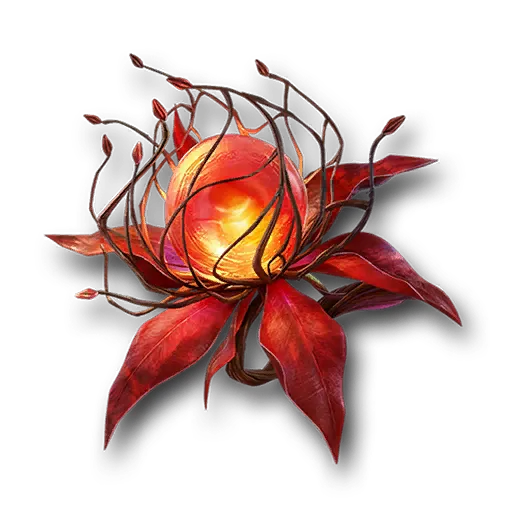
Parasitic Seed
In-game item text, all 4 tiers
Parasitic Seed
No ordinary soil could ever give rise to something like this.
Parasitic Sprout
Even the most dire of sins find their start as seemingly harmless transgressions.
Parasitic Bud
It seeks out living vessels to enter into: any lifeform or consciousness within its reach.
Parasitic Fruit
It's actually edible, if one can stomach the taste of rust and old blood, that is.
Rustium is the spoiled end of the Silverium cycle, and most of what the game says about it is said in system text: corrosion, contamination, hazard warnings. The Parasitic Seed ladder is the exception. It is four inventory rows that watch one plant grow, and it is written as horror.
The arc
The seed comes first, discoloured in a way the item description calls unnatural, and the flavour line is one sentence. No ordinary soil could give rise to something like this. Read that as a question about where the soil was.
The sprout is where the analogy lands. Its shoot is blood-red and could be mistaken for a vein, and the text abandons botany completely: even the worst sins start as transgressions that look harmless. The game has stopped describing a plant.
The bud blooms crimson and luminous in the dark, and the line finally says what it does. It looks for living vessels to enter, and it will take any lifeform or consciousness within reach. Consciousness is the word that matters. This is a plant that infects minds, in a game whose central system is walking around inside them.
Then the fruit, plump, heavy, nourished on blood, and the flavour text turns almost chatty. It is edible, if you can stomach the taste of rust and old blood. That is the whole line. After three tiers of escalating dread the game shrugs and tells you somebody has tried it.
Why this ladder is worth reading
Rustium contamination is normally handed to you as a stat modifier or a hazard zone. Here it has a life cycle, an appetite and a preference for consciousness, which is a substantially stronger claim than anything on the Silverium overview.
It also raises a question the ladder does not answer. If corrupted matter seeks out consciousness to inhabit, the boundary between contaminated material and contaminated person is thinner than the game's cleanup crews behave as though it is. That is the sort of thing worth keeping on the board.
The seed and sprout come out of Info Exchange and Combat Approaches, the bud and fruit out of Craft. You will farm hundreds of them for Potential Breaks and never once open the panel that says what you are holding.
Send this exhibit to whoever is building the case with you.